 |
| |
 |
| |
 |
| |
 |
| |
 |
| |
 |
| burwenaudio.com |

Dick Burwen has been a major figure in the electronics world for over 60 years.
At the early age of eight Dick knew he wanted to design electronic equipment. Inspired by his father Henry Burwen, who once worked in a radio store, he
built several crystal radios, graduating to single tube, two tube, and three tube circuits. At 14 he acquired professional first class radiotelephone and
second class radiotelegraph licenses and had built his amateur radio station, W1NMG. During his high school years in Melrose, Massachusetts Dick
and his dad serviced radios in their basement. Dick did the troubleshooting and his dad refinished the wooden cabinets. World War II was under way
and Dick worked for a year after school at National Company Inc. aligning and troubleshooting the Navy version of the HRO short wave receiver.
built several crystal radios, graduating to single tube, two tube, and three tube circuits. At 14 he acquired professional first class radiotelephone and
second class radiotelegraph licenses and had built his amateur radio station, W1NMG. During his high school years in Melrose, Massachusetts Dick
and his dad serviced radios in their basement. Dick did the troubleshooting and his dad refinished the wooden cabinets. World War II was under way
and Dick worked for a year after school at National Company Inc. aligning and troubleshooting the Navy version of the HRO short wave receiver.
Dick got hands-on experience at the Navy Radio Technician training schools and theoretical training at Harvard where he earned Bachelor’s and Master’
s degrees. At Bell Laboratories during the summer of 1949 between semesters, he designed a tracking band-pass filter. His first job after finishing
graduate school was at Spencer-Kennedy Laboratories, Inc. where he designed all the RF distribution networks, and planned and supervised the initial
installation of the second cable TV system built.
s degrees. At Bell Laboratories during the summer of 1949 between semesters, he designed a tracking band-pass filter. His first job after finishing
graduate school was at Spencer-Kennedy Laboratories, Inc. where he designed all the RF distribution networks, and planned and supervised the initial
installation of the second cable TV system built.
At Krohn-Hite Corp. Dick designed the laboratory UF101 Ultra-Low distortion Power Amplifier. Using type 6550 output tubes in a multiple-loop,
high-feedback system, this amplifier, rated at 0.005% distortion was manufactured in small quantity for 20 years. From 1955 to 1961 Dick designed hi-fi
equipment at National Company, Inc., circuits for military equipment at Norden-Ketay Corp., sensitive DC measuring instruments, and a 1 kW transistor
power for Navy sonar research at Honeywell Corp., Boston Division. During weekends and evenings he designed circuits as a consultant to other
companies.
high-feedback system, this amplifier, rated at 0.005% distortion was manufactured in small quantity for 20 years. From 1955 to 1961 Dick designed hi-fi
equipment at National Company, Inc., circuits for military equipment at Norden-Ketay Corp., sensitive DC measuring instruments, and a 1 kW transistor
power for Navy sonar research at Honeywell Corp., Boston Division. During weekends and evenings he designed circuits as a consultant to other
companies.
In September 1961 Dick quit his job at Honeywell to become a full-time circuit design consultant, working at his well equipped home laboratory for more
than 60 different companies during the next 42 years. He has authored more than 30 technical articles and received 14 patents. Among the circuits
Dick has designed are numerous medical instruments, industrial controls, laboratory test instruments, power supplies, aircraft instruments, automobile
ignition, detectors, high resolution video displays, and analog IC’s.
than 60 different companies during the next 42 years. He has authored more than 30 technical articles and received 14 patents. Among the circuits
Dick has designed are numerous medical instruments, industrial controls, laboratory test instruments, power supplies, aircraft instruments, automobile
ignition, detectors, high resolution video displays, and analog IC’s.
Dick got into a lot of really interesting projects. Among the more challenging projects were ultra-low drift chopper-stabilized DC data amplifiers, IC
multipliers and function generators, magnetometers, and low-noise switching power amplifiers. He designed circuitry of the first transistorized blood cell
counter, a seizure detector for epilepsy, photoelectric relays, high resolution CRT displays, early projection color TV, a military satellite spin detector, and
magnetometers for ground use and aircraft. His spacecraft magnetometer circuits successfully measured the magnetic field of the moon from orbit.
multipliers and function generators, magnetometers, and low-noise switching power amplifiers. He designed circuitry of the first transistorized blood cell
counter, a seizure detector for epilepsy, photoelectric relays, high resolution CRT displays, early projection color TV, a military satellite spin detector, and
magnetometers for ground use and aircraft. His spacecraft magnetometer circuits successfully measured the magnetic field of the moon from orbit.
When the government shut down ham radio for security reasons during World War II Dick became interested in hi-fi sound reproduction. In college and
graduate school at Harvard, Dick’s advisor was F. V. Hunt, inventor of the first low-pressure phono pickup – it tracked 16-inch transcription discs at only
5 grams instead of ounces. Dick was inspired to spend every afternoon in the Physics Library reading every article in every publication that had
anything to do with acoustics and music recording and reproduction. When Dick asked to take courses outside the normal curriculum, Dr. Hunt asked:
“Do you want to become a scientist or an audio nut?’ Dick’s answer: “Both”.
graduate school at Harvard, Dick’s advisor was F. V. Hunt, inventor of the first low-pressure phono pickup – it tracked 16-inch transcription discs at only
5 grams instead of ounces. Dick was inspired to spend every afternoon in the Physics Library reading every article in every publication that had
anything to do with acoustics and music recording and reproduction. When Dick asked to take courses outside the normal curriculum, Dr. Hunt asked:
“Do you want to become a scientist or an audio nut?’ Dick’s answer: “Both”.
Dick’s passion for audio has been steady for more than 70 years. Much of his life’s work in both audio and consulting for various companies has been in
multiple-loop high feedback systems. His developments in audio led to advances in his consulting projects and vice versa. The op amps Dick designed
for his own hi-fi system started semiconductor manufacturer, Analog Devices, Inc in 1965. He worked for the company for a number of years as a
consultant, designing many analog modules, and later, integrated circuits. For 24 years his consulting work was almost entirely for Copley Controls,
Corp., of which Dick was a founder. The company started producing Burwen designed switching servo amplifiers. A customer in the MRI business found
that seven of the book size Model 220 amplifiers in parallel on each of three axis eliminated two racks full of linear amplifiers, allowing an MRI system to fit
into a trailer. Since then Copley Controls has become dominant in gradient amplifiers. About 25% of the worlds hospital MRI systems used Dicks circuits.
multiple-loop high feedback systems. His developments in audio led to advances in his consulting projects and vice versa. The op amps Dick designed
for his own hi-fi system started semiconductor manufacturer, Analog Devices, Inc in 1965. He worked for the company for a number of years as a
consultant, designing many analog modules, and later, integrated circuits. For 24 years his consulting work was almost entirely for Copley Controls,
Corp., of which Dick was a founder. The company started producing Burwen designed switching servo amplifiers. A customer in the MRI business found
that seven of the book size Model 220 amplifiers in parallel on each of three axis eliminated two racks full of linear amplifiers, allowing an MRI system to fit
into a trailer. Since then Copley Controls has become dominant in gradient amplifiers. About 25% of the worlds hospital MRI systems used Dicks circuits.
One of Dicks clients in 1961 was Lafayette Radio, a New York parts distributor. Technicians in the store basement manufactured a 160 Watt Transistor
Stereo Power Amplifier of Dick’s design. The output stage used series connected germanium power transistors. In the early 1970’s a new company,
Burwen Laboratories, Inc developed the Model 2000 Noise Eliminator, a 3:1 companding noise reduction system that extended the dynamic range of an
analog tape recorder to 110 dB. It did not quite sell to A&M records who feared setting a new industry standard different from Dolby. Burwen
Laboratories did sell about 150 of its $3500 Model 1000 Dynamic Noise Filters. These one-way noise reduction systems for existing records and tapes
were used by recording studios and FM stations for many years.
Stereo Power Amplifier of Dick’s design. The output stage used series connected germanium power transistors. In the early 1970’s a new company,
Burwen Laboratories, Inc developed the Model 2000 Noise Eliminator, a 3:1 companding noise reduction system that extended the dynamic range of an
analog tape recorder to 110 dB. It did not quite sell to A&M records who feared setting a new industry standard different from Dolby. Burwen
Laboratories did sell about 150 of its $3500 Model 1000 Dynamic Noise Filters. These one-way noise reduction systems for existing records and tapes
were used by recording studios and FM stations for many years.
The Burwen Laboratories product line expanded to lower cost professional Dynamic Noise Filters and consumer versions. Later KLH acquired and
updated the consumer products. After more than 40 years a few Burwen Laboratories professional model 1000 Dynamic Noise Filters, KLH Burwen
Research consumer Dynamic Noise Filters, and Transient Noise Eliminators are still in use.
updated the consumer products. After more than 40 years a few Burwen Laboratories professional model 1000 Dynamic Noise Filters, KLH Burwen
Research consumer Dynamic Noise Filters, and Transient Noise Eliminators are still in use.
Dick built his first major hi-fi system when he was in high school and a freshman at Harvard. In contrast to his present 20,000 watt system, it used a 3-
watt amplifier. In common with the present system, it used feedback to boost extreme high and low frequencies to compensate for speaker loss and it
had colored lights – Christmas tree lamps. You can read about Dick’s present system and Audio Splendor software at http://www.burwenaudio.com In
the years between these two hi-fi systems Dick built ever more powerful and flexible systems. Much of the improvement resulted from tone control
development that compensated the speakers and program sources, and now his patented high frequency reverberation..
watt amplifier. In common with the present system, it used feedback to boost extreme high and low frequencies to compensate for speaker loss and it
had colored lights – Christmas tree lamps. You can read about Dick’s present system and Audio Splendor software at http://www.burwenaudio.com In
the years between these two hi-fi systems Dick built ever more powerful and flexible systems. Much of the improvement resulted from tone control
development that compensated the speakers and program sources, and now his patented high frequency reverberation..
As a consultant Dick helped Mark Levinson with the first products of Mark Levinson Audio Systems and Cello LTD’s Audio Palette. Millions of National
Semiconductor DNR chips licensed under Dick’s patents appeared in car stereos and other products. Now mostly retired from consulting, he is busier
than ever with new computer audio software. He has been married to his wife Barbara for 60 years.
Semiconductor DNR chips licensed under Dick’s patents appeared in car stereos and other products. Now mostly retired from consulting, he is busier
than ever with new computer audio software. He has been married to his wife Barbara for 60 years.
| Memberships |
ASA Acoustical Society of America - Life Member
AES Audio Engineering Society - Life Fellow
IEEE Institute of Electrical and Electronics Engineers - Life Senior Member
SEG Society of Exploration Geophysicists - Member
AES Audio Engineering Society - Life Fellow
IEEE Institute of Electrical and Electronics Engineers - Life Senior Member
SEG Society of Exploration Geophysicists - Member
AUDIO
Tone Control Software
Reverberation Software
Audio Palette
Noise Eliminator
Dynamic Noise Filter
Transient Noise Eliminator
Rotating Speaker Simulator
200 Watt Ultra Low Distortion Power Amplifier
8 Kilowatt Color Organ
Minus Noise Mixer
Tape Recorders
Volume Expander Compressors
Electronic Reverberation
Portable Transistor Music
System
Peak VU Meter
Tone Control Systems
Binaural Headphone Driver
Microphone Mixer
Musical Instrument Enhancement
Speaker Equalizer
Mixer Bass Blender
Phono Preamplifier
50 Watt Integrated Stereo
Graphic Equalizer
High Speed Limiter
Pitch Shifter
120 DB Dynamic Range Equalizer
4 Channel Power Amplifier
System
Antenna Amplifier
Op Amp Stereo
Overload Protection
Half Octave Filters
Electronic Crossovers
Low Noise Microphone
20 KW Speaker System
Intercom Systems
Stylus Force Gage
Low Noise Preamplifiers
Hum Filter
Wide Range Remote Equalizer
AUTOMOTIVE
Ignition Systems
SEABORNE
1kW Sonar Power Amplifier
DETECTION
Magnetic Gradiometer Electronics
Chopped Light Photoelectric Relay
Magnetometer Electronics
Radar IF Strip
Metal Detector
Proximity Switches
Photolectric Controls
Burglar and Fire Alarm
GROUND SUPPORT
Pressure Transducers
Strain Gage Amplifiers
Intercom Amplifier
POWER SUPPLIES
HIgh Performance Regulators
Current Sources
50 KV Supply
Frequency Changers
Overload Protection
Line Voltage Regulator
SCR Converters
Phase Controlled Regulators
Precision AC Sources
Subminiature Power Converters
Shunt Regulator Modules
Neon Sign RF Supply
Switching Regulators
Subminiature Dual Supply
Battery Float System
Hiqh Isolation Converters
Low Noise Medical Supplies
Tone Control Software
Reverberation Software
Audio Palette
Noise Eliminator
Dynamic Noise Filter
Transient Noise Eliminator
Rotating Speaker Simulator
200 Watt Ultra Low Distortion Power Amplifier
8 Kilowatt Color Organ
Minus Noise Mixer
Tape Recorders
Volume Expander Compressors
Electronic Reverberation
Portable Transistor Music
System
Peak VU Meter
Tone Control Systems
Binaural Headphone Driver
Microphone Mixer
Musical Instrument Enhancement
Speaker Equalizer
Mixer Bass Blender
Phono Preamplifier
50 Watt Integrated Stereo
Graphic Equalizer
High Speed Limiter
Pitch Shifter
120 DB Dynamic Range Equalizer
4 Channel Power Amplifier
System
Antenna Amplifier
Op Amp Stereo
Overload Protection
Half Octave Filters
Electronic Crossovers
Low Noise Microphone
20 KW Speaker System
Intercom Systems
Stylus Force Gage
Low Noise Preamplifiers
Hum Filter
Wide Range Remote Equalizer
AUTOMOTIVE
Ignition Systems
SEABORNE
1kW Sonar Power Amplifier
DETECTION
Magnetic Gradiometer Electronics
Chopped Light Photoelectric Relay
Magnetometer Electronics
Radar IF Strip
Metal Detector
Proximity Switches
Photolectric Controls
Burglar and Fire Alarm
GROUND SUPPORT
Pressure Transducers
Strain Gage Amplifiers
Intercom Amplifier
POWER SUPPLIES
HIgh Performance Regulators
Current Sources
50 KV Supply
Frequency Changers
Overload Protection
Line Voltage Regulator
SCR Converters
Phase Controlled Regulators
Precision AC Sources
Subminiature Power Converters
Shunt Regulator Modules
Neon Sign RF Supply
Switching Regulators
Subminiature Dual Supply
Battery Float System
Hiqh Isolation Converters
Low Noise Medical Supplies
VIDEO
Projection Color Receiver
Image Storage Systems
Community TV Amplifiers
Facsimile Video Processor
Precision Deflection Amplifiers
Linearity Correctors
Video Amplifiers
IF Strips
Cable TV Distribution Networks
Barre, Vermont Cable TV System
Character Deflection Amplifier
Crystal Oscillators
Chroma Demodulator
Precision Pulse Delay
Blanking
Grid Bias Controllers
Precision Sweep Generators
Focus Regulators
Digital Programming
Dynamic Focus
MEDICAL
MRI Gradient Power Amplifiers
Ultrasound Monitor
Blood Pressure Module
Blood Cell Counting and Sizing
Cardiotachometers
EEG Preamplifiers
EKG Preamplifiers
Seizure Detector
Response Analyzer
Linear Ohmmeter
Amplifier Noise Filter
Continuous Performance Tester
Channel Selector
Baby Monitor
Blood Oxygen Monitor
PH Preamplifier
Temperature Measurement System
Automatic Gain Control
Temperature Controller
Battery Charging System
Carbon Dioxide Monitor
SPACE VEHICLE
Analog to Digital Converter
Magnetometer Electronics including:
Phase Locked Loop
Spin Demodulator
Carrier Amplifier
DC Signal Processing
Milliwatt Power Converter
CABLE TV
System Distribution Networks
Giant Horn Antenna
Barre, Vermont System, 1952
Other Towns
LABORATORY
Gas Pollution Monitors
Magnet Controller
Audio Time Correlator
DC Data Amplifiers
Pen Motor Drive Amplifier
Servo Recorder
Beam Current Controller
Accelerometer Amplifier
Square Wave Generator
Humidity Sensor
Microwatt Meter
Semiconductor Testers
Low Noise Preamplifiers
Electronic Thermometer
Multiplier Tester
Streaming Current Detector
Film Motion Controller
Projection Color Receiver
Image Storage Systems
Community TV Amplifiers
Facsimile Video Processor
Precision Deflection Amplifiers
Linearity Correctors
Video Amplifiers
IF Strips
Cable TV Distribution Networks
Barre, Vermont Cable TV System
Character Deflection Amplifier
Crystal Oscillators
Chroma Demodulator
Precision Pulse Delay
Blanking
Grid Bias Controllers
Precision Sweep Generators
Focus Regulators
Digital Programming
Dynamic Focus
MEDICAL
MRI Gradient Power Amplifiers
Ultrasound Monitor
Blood Pressure Module
Blood Cell Counting and Sizing
Cardiotachometers
EEG Preamplifiers
EKG Preamplifiers
Seizure Detector
Response Analyzer
Linear Ohmmeter
Amplifier Noise Filter
Continuous Performance Tester
Channel Selector
Baby Monitor
Blood Oxygen Monitor
PH Preamplifier
Temperature Measurement System
Automatic Gain Control
Temperature Controller
Battery Charging System
Carbon Dioxide Monitor
SPACE VEHICLE
Analog to Digital Converter
Magnetometer Electronics including:
Phase Locked Loop
Spin Demodulator
Carrier Amplifier
DC Signal Processing
Milliwatt Power Converter
CABLE TV
System Distribution Networks
Giant Horn Antenna
Barre, Vermont System, 1952
Other Towns
LABORATORY
Gas Pollution Monitors
Magnet Controller
Audio Time Correlator
DC Data Amplifiers
Pen Motor Drive Amplifier
Servo Recorder
Beam Current Controller
Accelerometer Amplifier
Square Wave Generator
Humidity Sensor
Microwatt Meter
Semiconductor Testers
Low Noise Preamplifiers
Electronic Thermometer
Multiplier Tester
Streaming Current Detector
Film Motion Controller
INTEGRATED CIRCUITS
Multipliers
FET Operational Amplifier
Low Drift Amplifier
CRT Distortion Corrector
Proximity Switch
FUNCTION MODULES
Precision Rectifiers
Wide Band Gain Controller
Power Supply Regulators
DC Operational Amplif iers
Chopper Stabilized Amplifiers
Sample Hold
Analog to Digital Converter
Binary to BCD
Active Filters
Comparators
Voltage Variable Filters
PWM Multipliers
Data Amplifiers
Peak Followers
Multiplexers
Low Noise Amplifiers
Oscillators
Automatic Level Control
Active Transformer
AC Operational Amplifiers
Servo Amplifiers
Digital Tape Head Electronics
AIRBORNE
Temperature Gage
Low Altitude Warning System
Scan Converter
Magnetometer
Aileron Control
Synchro Amplifier
Temperature Controller
Lamp Flasher
Noise Rejection Amplifier
Servo Amplifier
INDUSTRIAL CONTROL
Switching Servo Amplifiers
DSP Servo Amplifier
AccuData II Chopper
Stabilized DC Amplifier
Laser Trimmer Control
DC Operational Amplifiers
Particle Size Analyzer
100 Watt Valve Driver
Digital Analog Position Programmer
Photoelectric Relays
Power Operational Amplifiers
MultiplIers
Pulse Width Modulators
Lamp Dimmers
Chopper Amplifiers
Peak Voltmeter
Logarithmic Amplifier
Liquid Mixture Control System
Braking Energy Absorbers
AC Current Limiter
Nanovolt DC Amplifiers
Motor Speed Control
Temperature Measurement
Integrators
Proximity Sensors
Voltage Controlled Oscillators
Phase Shifter
Stable Oscillators
Precision Charge Dispenser
Phase Sensitive Demodulators
AC DC Converter
40 Watt Torque Motor Driver
Die Bonder
Multipliers
FET Operational Amplifier
Low Drift Amplifier
CRT Distortion Corrector
Proximity Switch
FUNCTION MODULES
Precision Rectifiers
Wide Band Gain Controller
Power Supply Regulators
DC Operational Amplif iers
Chopper Stabilized Amplifiers
Sample Hold
Analog to Digital Converter
Binary to BCD
Active Filters
Comparators
Voltage Variable Filters
PWM Multipliers
Data Amplifiers
Peak Followers
Multiplexers
Low Noise Amplifiers
Oscillators
Automatic Level Control
Active Transformer
AC Operational Amplifiers
Servo Amplifiers
Digital Tape Head Electronics
AIRBORNE
Temperature Gage
Low Altitude Warning System
Scan Converter
Magnetometer
Aileron Control
Synchro Amplifier
Temperature Controller
Lamp Flasher
Noise Rejection Amplifier
Servo Amplifier
INDUSTRIAL CONTROL
Switching Servo Amplifiers
DSP Servo Amplifier
AccuData II Chopper
Stabilized DC Amplifier
Laser Trimmer Control
DC Operational Amplifiers
Particle Size Analyzer
100 Watt Valve Driver
Digital Analog Position Programmer
Photoelectric Relays
Power Operational Amplifiers
MultiplIers
Pulse Width Modulators
Lamp Dimmers
Chopper Amplifiers
Peak Voltmeter
Logarithmic Amplifier
Liquid Mixture Control System
Braking Energy Absorbers
AC Current Limiter
Nanovolt DC Amplifiers
Motor Speed Control
Temperature Measurement
Integrators
Proximity Sensors
Voltage Controlled Oscillators
Phase Shifter
Stable Oscillators
Precision Charge Dispenser
Phase Sensitive Demodulators
AC DC Converter
40 Watt Torque Motor Driver
Die Bonder

In 1963 there were no low-power integrated circuits. This is one of three trays of discrete transistor circuits accompanying a three axis sensor. The
sensor used 0.5 watt of power, leaving 0.25 watt on which to operate 200 transistors. It worked for several years circling the moon
sensor used 0.5 watt of power, leaving 0.25 watt on which to operate 200 transistors. It worked for several years circling the moon

| DICK BURWEN'S FIRST HI-FI SYSTEM, 1945 |
The power amplifier delivered 3 watts from a single 6L6G pentode, with feedback that equalized the speakers at extreme high and low frequencies as
much as 30 dB. Bass and treble controls provided flexibility. The speaker system consisted of a Jensen 15 inch coaxial and two 5-inch tweeters. A
labyrinth inside the cabinet extended the low frequency response. It had colored lights and the sound was loud, brilliant, and deep, without boom..
A 25 pound steel plate substituted for the original 78 rpm phono platter, and the Audax pickup used the first diamond stylus. Before that, sapphire styli
lasted only 25 plays.
When Dick was a freshman at Harvard he sold a long technical srticle on this system to Radio News magazine called "Objectives in High Fidelity Amplifier
Design". It advocated a large rise in frequency response at 30 Hz and 15 kHz instead of flat rsponse. The article was never published.
much as 30 dB. Bass and treble controls provided flexibility. The speaker system consisted of a Jensen 15 inch coaxial and two 5-inch tweeters. A
labyrinth inside the cabinet extended the low frequency response. It had colored lights and the sound was loud, brilliant, and deep, without boom..
A 25 pound steel plate substituted for the original 78 rpm phono platter, and the Audax pickup used the first diamond stylus. Before that, sapphire styli
lasted only 25 plays.
When Dick was a freshman at Harvard he sold a long technical srticle on this system to Radio News magazine called "Objectives in High Fidelity Amplifier
Design". It advocated a large rise in frequency response at 30 Hz and 15 kHz instead of flat rsponse. The article was never published.


| A 2-WATT AMPLIFIER WITH BASS AND TREBLE CONTROLS, 1946 |
LIGHTS ON
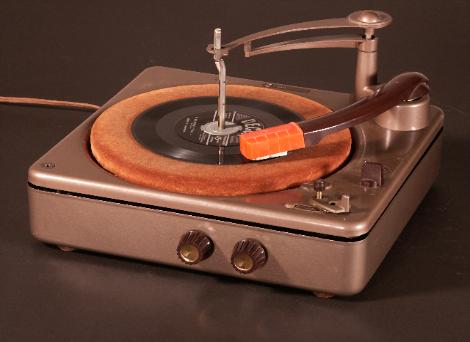

After showing it to a few potential customers Dick realized that those who appreciated the sound didn't have enough money and those who had the
money didn't care. About the same time a call came from Spencer-Kennedy Laboratories, Inc. who needed an engineer. That was Dicks first
two-year job where he became a pioneer in cable TV.
money didn't care. About the same time a call came from Spencer-Kennedy Laboratories, Inc. who needed an engineer. That was Dicks first
two-year job where he became a pioneer in cable TV.

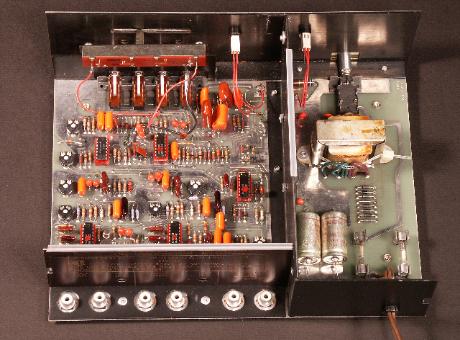
| DYNAMIC NOISE FILTER DNF1201 |
Burwen Laboratories and later KLH Burwen Research produced his one-way consumer noise reduction system in the early 1970s. It reduced hiss
from tapes and records with little effect on the sound. It worked by cutting off high frequencies at 9 db/octave during quiet music when there is little
harmonic content, and gradually and automatically extending the bandwidth beyond 20 kHz when there is loud high frequency content.
from tapes and records with little effect on the sound. It worked by cutting off high frequencies at 9 db/octave during quiet music when there is little
harmonic content, and gradually and automatically extending the bandwidth beyond 20 kHz when there is loud high frequency content.
| RICHARD S. BURWEN |
Dick is author of 40 technical articles and has been granted 14 patents so far by the US Patent and Trademark Office.
REGISTERED PROFESSIONAL ENGINEER IN MASSACHUSETTS
| Dick Burwen's Designs |
| PIONEER SPACECRAFT MAGNETOMETER |
| 1950 WEBCOR RECORD CHANGER WITH 50 WATT AMPLIFIER |

| DICK PICKS A CD Dick made the photos of himself, his studio, and equipment. |
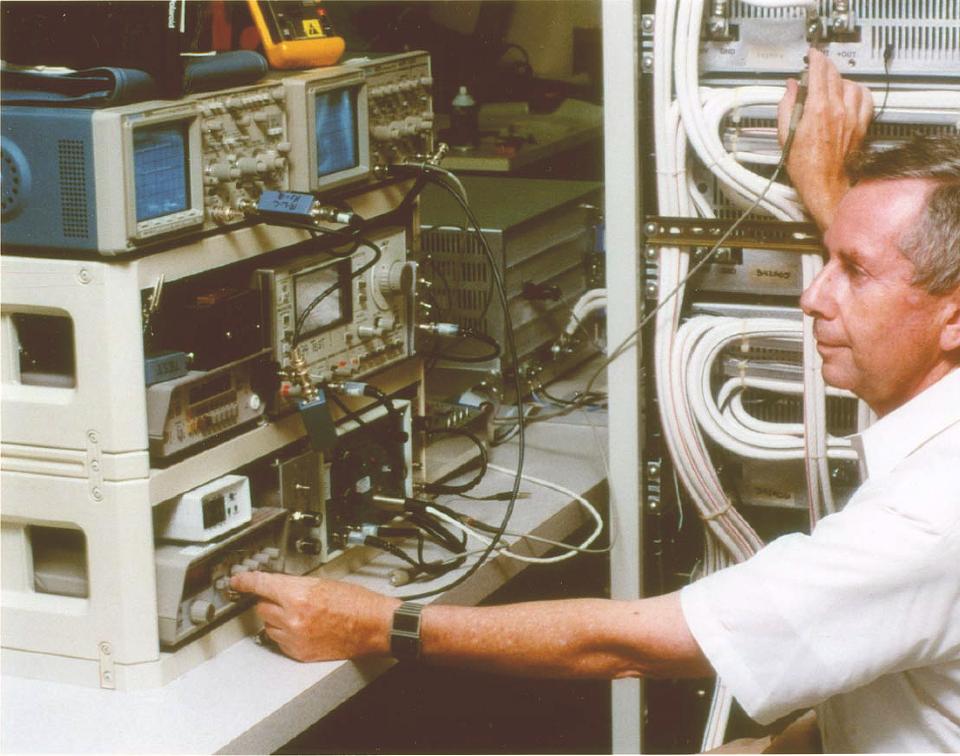
| DICK WORKING ON EARLY COPLEY CONTROLS MODEL 264 MRI GRADIENT AMPLIFIER AROUND 1990 |